

How to Choose a Wood Console Table for Your Living Room
A wood console table is one of the most stylish and practical furniture pieces you can add to a living room. Whether you’re filling an empty wall, anchoring a sofa, or creating a curated display area, the right console table blends function and beauty. But with so many styles, sizes, and wood types available, choosing the perfect one can feel overwhelming.
Here’s a clear, expert guide to help you pick the right wood console table for your living room.
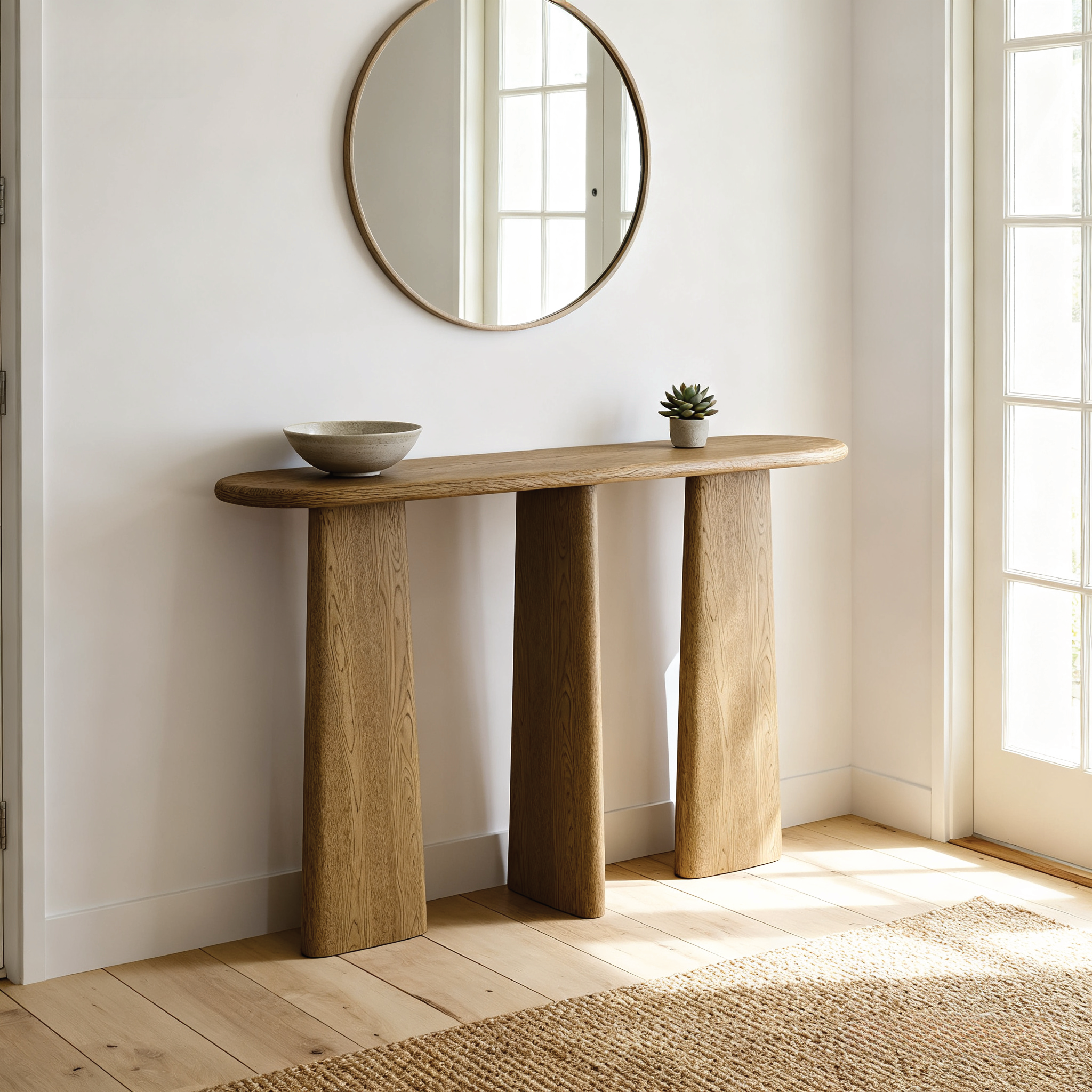
1. Measure Your Space First
Before browsing styles, start with dimensions:
Length: The table should be proportional to the wall or sofa it’s placed beside. As a general rule, aim for the console to be about ⅔–¾ the length of a sofa if placed behind it.
Depth: A depth of 12–18 inches is ideal for living rooms—deep enough to hold decoration but slim enough to keep circulation clear.
Height: Console tables usually range between 28–32 inches tall. Choose a height that visually aligns with your seating or nearby furniture.
Accurate measurements prevent a table from feeling too cramped or too tiny in a large room.
2. Choose the Right Wood Type
The wood species greatly affects style, durability, and price:
Oak: Classic, durable, and rich in grain—perfect for a timeless living space.
Walnut: Darker, warm, and sophisticated, ideal for more elegant or modern interiors.
Maple or Ash: Light-toned woods that brighten a room and work well with minimalist or Scandinavian styles.
Solid wood has unmatched longevity and ages beautifully over time. It’s a smart long-term investment for your living room centerpiece.
3. Match Your Interior Style
Your console table should feel like it belongs in your living room:
Traditional: Look for carved details, turned legs, or warmer stains.
Modern/Minimal: Clean lines, simple profiles, and lighter finishes.
Rustic/Industrial: Reclaimed wood, natural knots, or mixed materials like metal accents.
Transitional: A blend of classic and modern elements—versatile and easy to style.
Choose a wood finish that ties into your existing palette—either complementing or contrasting with your floor and furniture.
4. Think About Functionality
A console table can do more than look good:
Storage Needs: If you need hidden storage, choose models with drawers or cabinets.
Display Space: Open surfaces work well for decorations, lamps, and books.
Multipurpose: In smaller living rooms, a console can double as a mini desk or media table.
Consider what you’ll use it for every day—not just how it looks.
5. Balance Design and Durability
Since console tables are often in high-traffic areas:
Choose solid joinery (dovetail, mortise-and-tenon) rather than weak fasteners.
Avoid finishes that scratch easily; look for protective coatings or oil-based finishes that age gracefully.
Well-crafted wood not only looks better but lasts for decades.
6. Styling Tips That Complement Your Table
Once you choose the right piece, elevate it with thoughtful styling:
Layer Heights: Use a tall lamp, a medium planter, and a stack of books.
Add Texture: A woven basket underneath or ceramic accents on top adds visual interest.
Keep It Balanced: Too many small objects can feel cluttered—leave intentional negative space.
A styled console table becomes a curated focal point in your living room.
7. Choose Quality That Lasts
A wood console table is often a long-term investment. Choosing quality craftsmanship and solid materials means:
Better resistance to wear and tear
Timeless appeal that transcends trends
A piece that adapts with evolving decoration
If you’re considering options like solid oak or handcrafted finishes, prioritize pieces that feel substantial and refined—furniture that will age as beautifully as your home evolves.
Choosing the right wood console table for your living room isn’t just about picking something that fits—it’s about selecting a piece that harmonizes with your space, supports your lifestyle, and enhances everyday living.
With the right size, wood type, and design in mind, your console table becomes more than furniture—it becomes a defining element in your home.