

What Is a Console Table and How to Style It?
A console table is one of the most versatile pieces of furniture in a home. Slim, understated, and endlessly adaptable, it adds both function and style without overwhelming a space. Whether placed in an entryway, behind a sofa, or along a hallway wall, a console table quietly elevates the room.
But what exactly is a console table—and how can you style it well?
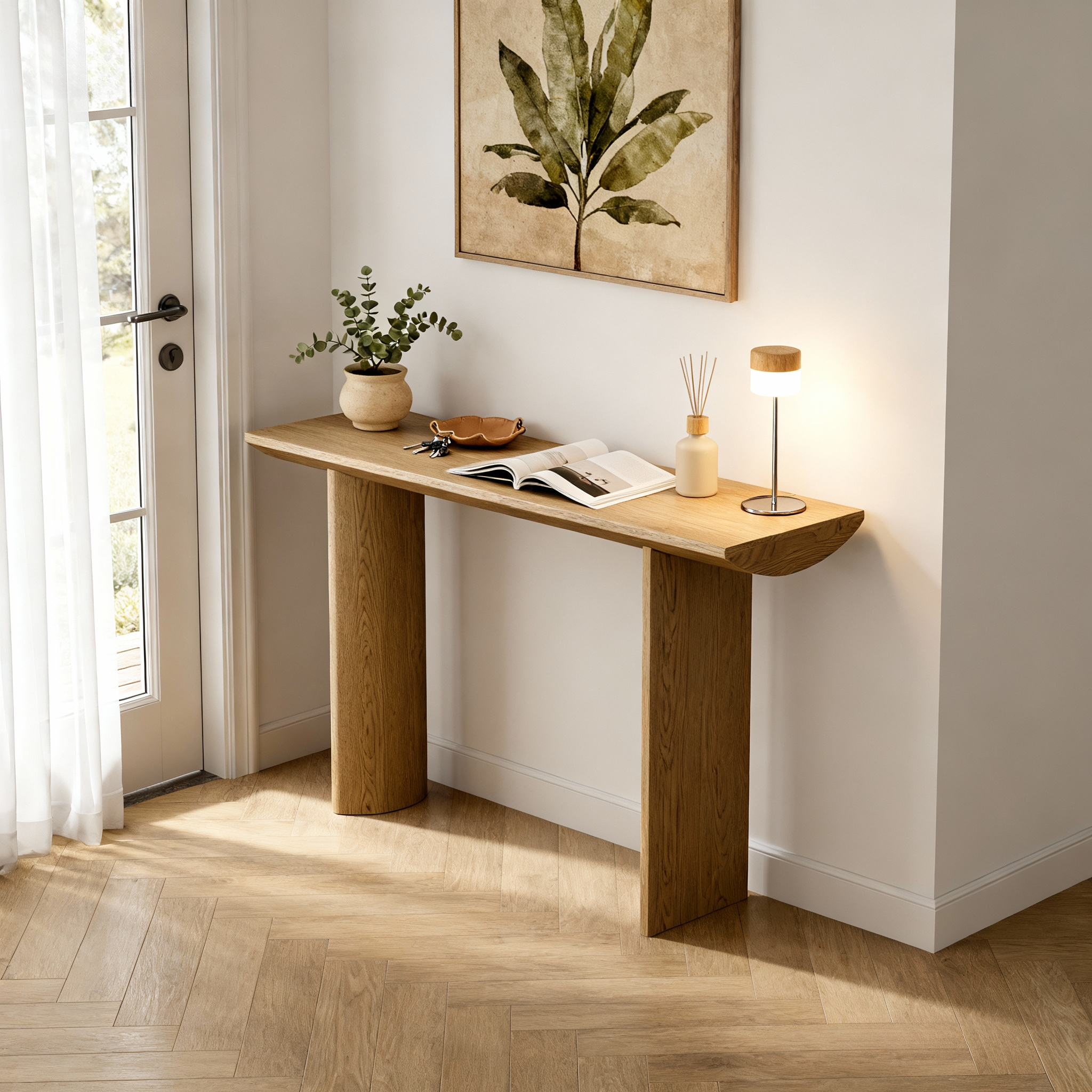
What Is a Console Table?
A console table is a narrow table designed to sit against a wall or behind furniture. Compared to sideboards or desks, it has a slimmer profile and lighter visual presence, making it ideal for spaces where full-depth furniture would feel too heavy.
Traditionally decorative, modern console tables balance form and function. They can serve as:
A welcoming surface in an entryway
A display table in a hallway
A practical accent behind a sofa
A compact storage and styling piece in living or dining spaces
In solid wood, a console table also brings warmth, texture, and natural character to transitional areas of the home.
Where to Place a Console Table
Entryway
This is the most classic placement. A console table provides a landing spot for keys, bags, and daily essentials while setting the tone for the rest of the home.
Behind the Sofa
Placed along the back of a sofa, a console table helps visually anchor the seating area. It’s perfect for table lamps, books, or subtle decoration without cluttering the coffee table.
Hallway or Corridor
In long or narrow hallways, a slim console table breaks up empty wall space and adds interest without blocking movement.
Dining or Living Area
A console table can function as a light sideboard—ideal for displaying ceramics, artwork, or seasonal decoration.
How to Style a Console Table
Styling a console table is about balance: height, texture, and restraint.
1. Start with One Anchor Piece
Choose a main focal point, such as:
A mirror or framed artwork above the table
A statement lamp
A tall vase or sculptural object
This gives the setup structure and draws the eye.
2. Layer with Different Heights
Combine tall, medium, and low elements to create visual rhythm. For example:
A table lamp or vase
A stack of books
A small decorative object
Avoid lining everything up at the same height—it can feel flat and static.
3. Use Natural Materials
Wood, ceramics, linen, glass, or stone pair beautifully with a solid wood console table. These materials reinforce a calm, timeless aesthetic and keep the styling cohesive.
4. Leave Breathing Space
A console table doesn’t need to be fully filled. Negative space is part of the design. Leaving some areas clear helps the table feel intentional rather than cluttered.
5. Add a Personal Touch
Finish with something that reflects everyday life—books you love, a handmade object, or a subtle scent. The best console tables feel lived-in, not staged.
Choosing the Right Console Table
When selecting a console table, consider:
Depth:Slim enough to suit the space without crowding it
Height:Typically similar to a desk or slightly higher
Material:Solid wood offers durability, warmth, and long-term value
Design:Clean lines and balanced proportions make styling easier over time
A well-made console table is not just an accent—it’s a piece that adapts as your space and lifestyle evolve.
A console table may be quiet in form, but it plays a powerful role in interior design. Thoughtfully chosen and simply styled, it brings order, warmth, and intention to spaces that are often overlooked.
Whether minimal or layered, functional or decorative, a console table proves that small, well-designed furniture can make a lasting impact.