

When Storage Becomes More Than Function, How Does Furniture Shape a Space?
In contemporary interiors, storage is no longer just about containing objects—it is about creating order, proportion, and a sense of calm that lasts over time. Well-designed cabinetry does more than serve a practical purpose; it quietly defines how a space feels and functions on a daily basis.
This pairing of a tall chest and a low sideboard was designed to respond to different spatial needs while maintaining a unified and restrained design language.
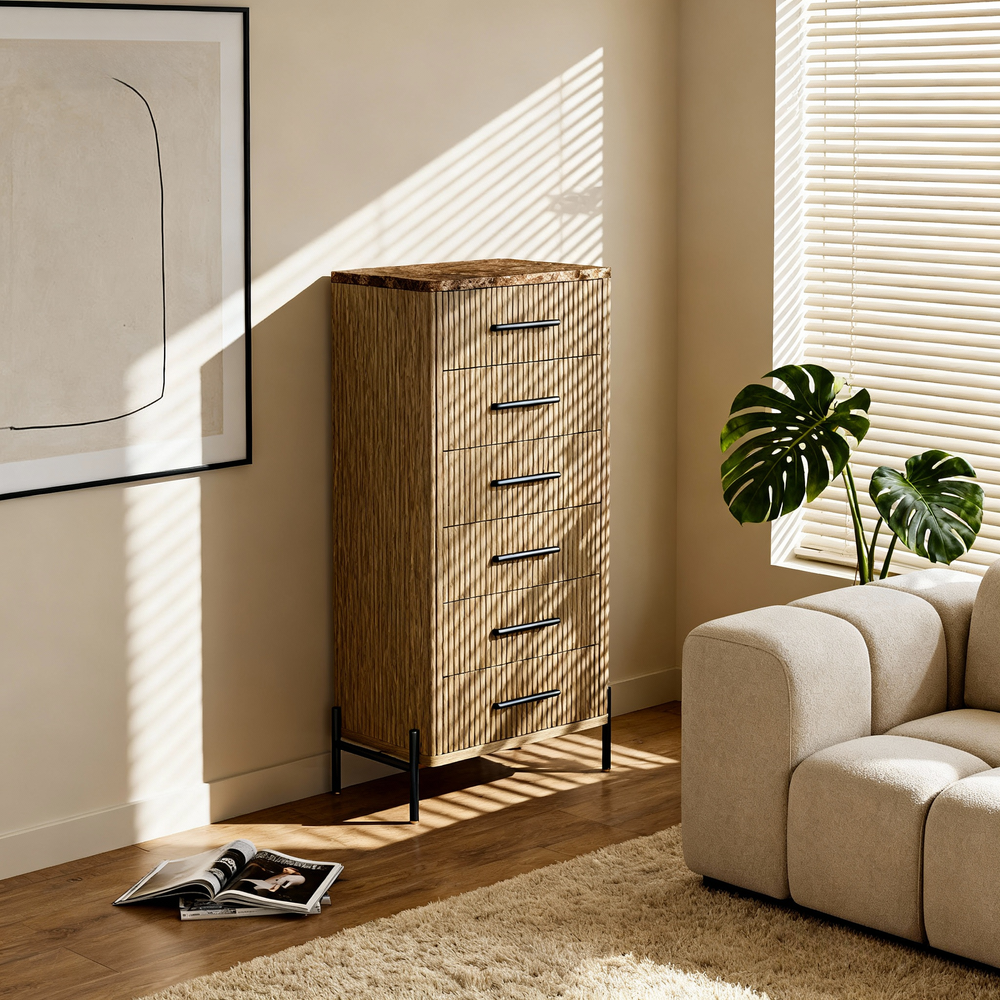
The tall chest is defined by its vertical proportions, offering generous storage within a compact footprint. Six drawers provide clear organization for clothing, documents, and everyday items, making it well suited for bedrooms, living areas, or study spaces. Its upright form introduces visual height to the room while remaining light and unobtrusive.
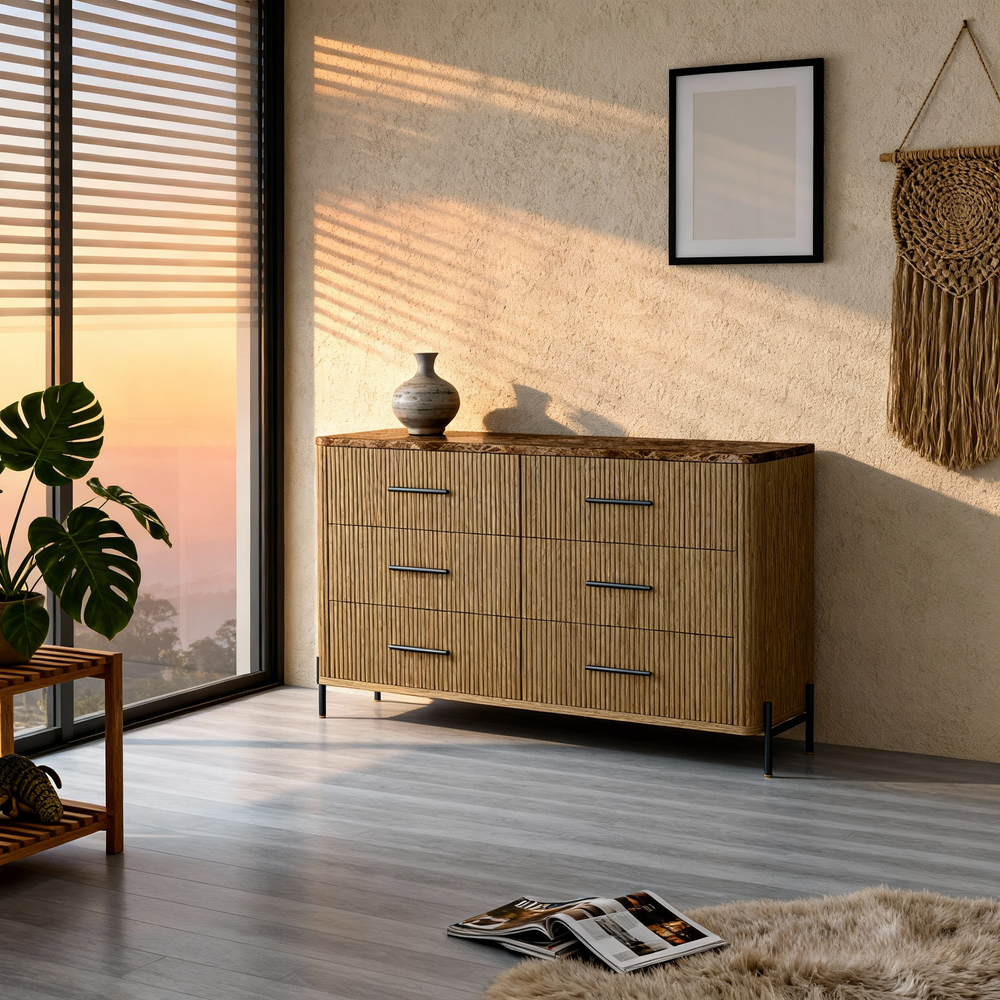
The sideboard, in contrast, extends horizontally and integrates naturally along the wall. Ideal for living rooms, shared spaces, or open areas, its broad top surface allows for the display of objects or daily essentials, while the drawers below keep visual clutter out of sight. The result is a clean, balanced presence that supports both function and atmosphere.
Both pieces share a consistent material expression. The vertically textured wood surface creates subtle rhythm and depth, responding gently to natural light throughout the day. This restrained surface treatment allows larger wooden forms to remain visually calm and enduring rather than overwhelming.
Metal handles and raised metal legs introduce a quiet modern contrast, lightening the overall silhouette and enhancing the sense of openness. Whether placed individually or together as a set, the pieces establish a cohesive sense of order and continuity within the space.
Rather than seeking immediate visual impact, this cabinet collection is designed for longevity—defined by thoughtful proportions, tactile materials, and a calm visual language. From private interiors to more open living environments, each piece responds to the same essential idea: storage should belong naturally to the space, not compete for attention.