

Are You Making This Common Living Room Coffee Table Mistake?
Is your coffee table the same height as your sofa cushions, or 1–2 inches lower?
Is your coffee table about two-thirds the length of your sofa for visual balance?
Have you chosen materials and features—such as storage or durability—that match your daily lifestyle?
At first glance, choosing a coffee table for your living room seems simple enough. You walk into a store you like, pick a piece you’re drawn to, and take it home (or have it delivered). But once you look closer, you’ll realize that selecting the right coffee table involves far more decisions than you might expect.
A well-chosen coffee table needs to be the right size—both in height and in overall dimensions. It should feel proportional to the room, work seamlessly with your existing furniture, and suit the way you actually live. The material matters, the layout matters, and even your family’s habits matter—whether you need something kid-friendly or extra storage for remotes and everyday items.
Only after answering these questions can you truly start looking for the perfect coffee table. So how do you choose one from start to finish? Below are the key questions to ask before committing to a coffee table you’ll love long-term.
How should you choose the right coffee table height?
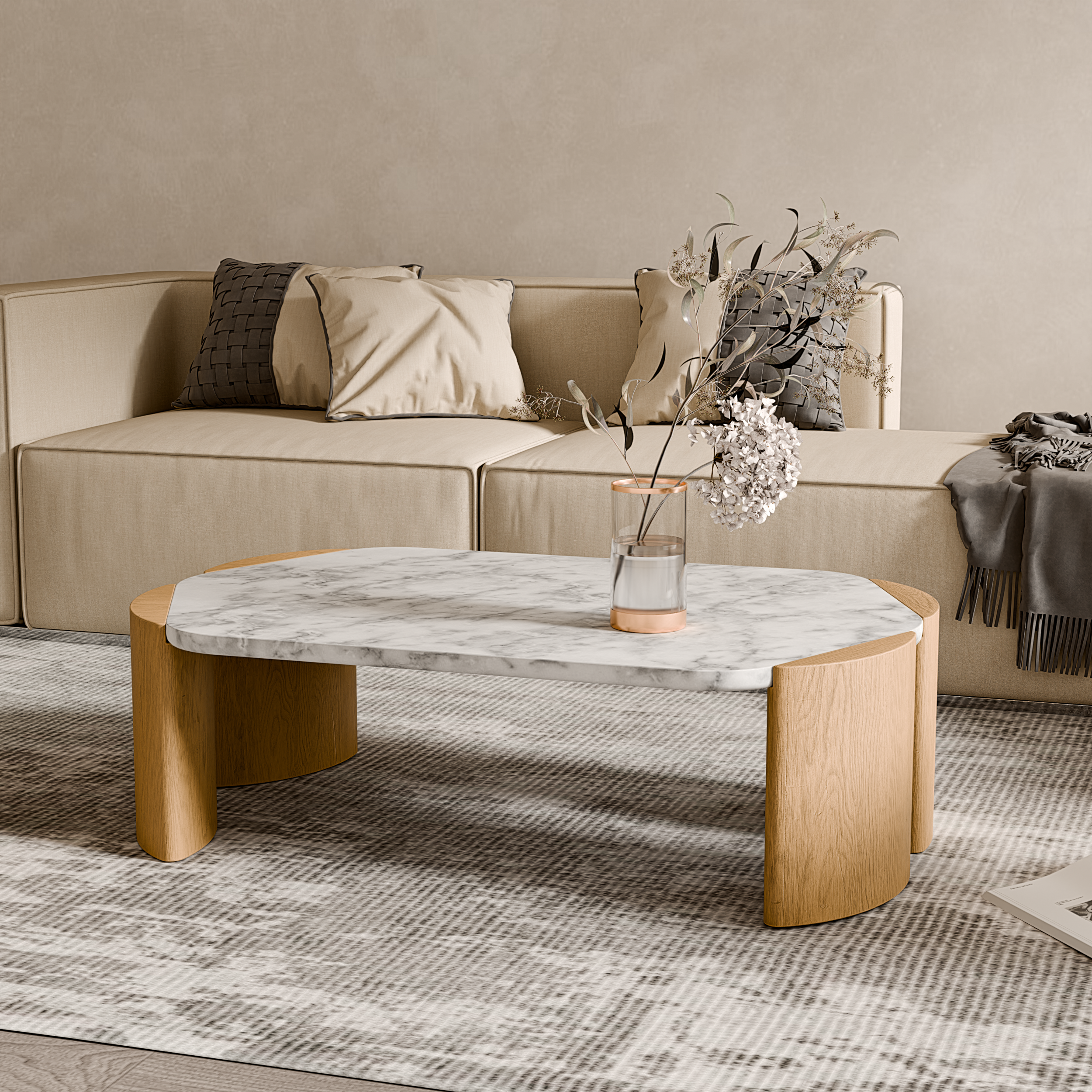
Nothing feels more awkward than a coffee table that’s too high or too low. For a comfortable and visually balanced living room, your coffee table should be the same height as your sofa cushions, or 1–2 inches lower.
Anything significantly higher or lower can make the space feel off—both in appearance and in everyday use.
Does the proportion between your coffee table and sofa really matter?
Just as important as height is the length of your coffee table in relation to your sofa. A widely used design guideline is that your coffee table should be approximately two-thirds the length of your sofa.
For example, if your sofa is 96 inches long, a coffee table around 64 inches will feel balanced and intentional, rather than too small or overpowering.
How much clearance should you leave around a coffee table?
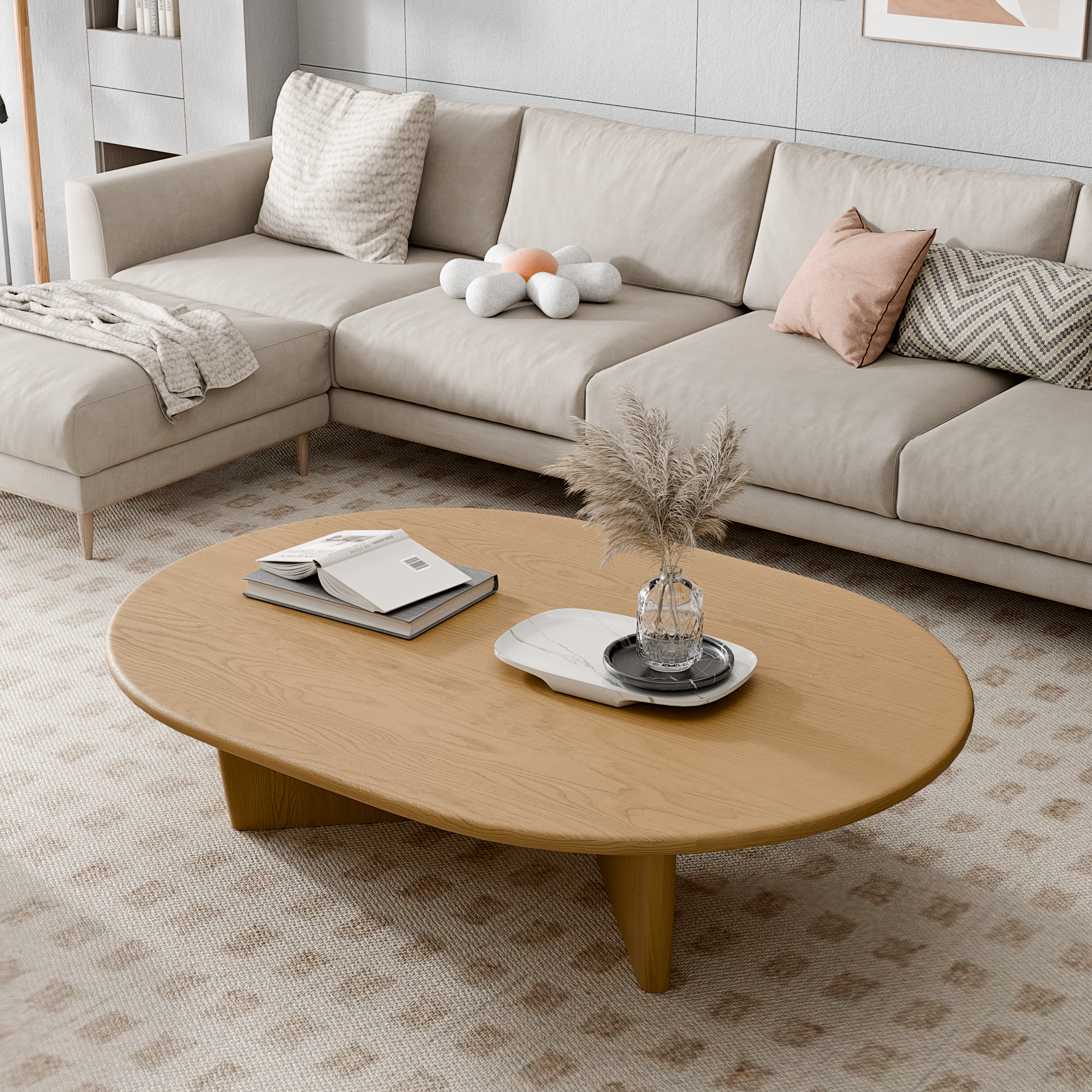
Once you’ve determined the right height and length, it’s time to think about shape and spacing. Whether you choose a square, rectangular, round, or oval coffee table, clearance is key.
Leave 12–18 inches between the coffee table and the sofa
Leave at least 24–30 inches between the coffee table and the TV stand or fireplace for easy circulation
To estimate the ideal width of your coffee table, measure the distance between your sofa and TV stand, then subtract about 42 inches. This helps maintain comfort and flow.
Does the “visual weight” of a coffee table affect the room?
An often-overlooked detail when choosing a coffee table is its visual weight—how heavy or light it feels compared to the rest of the furniture.
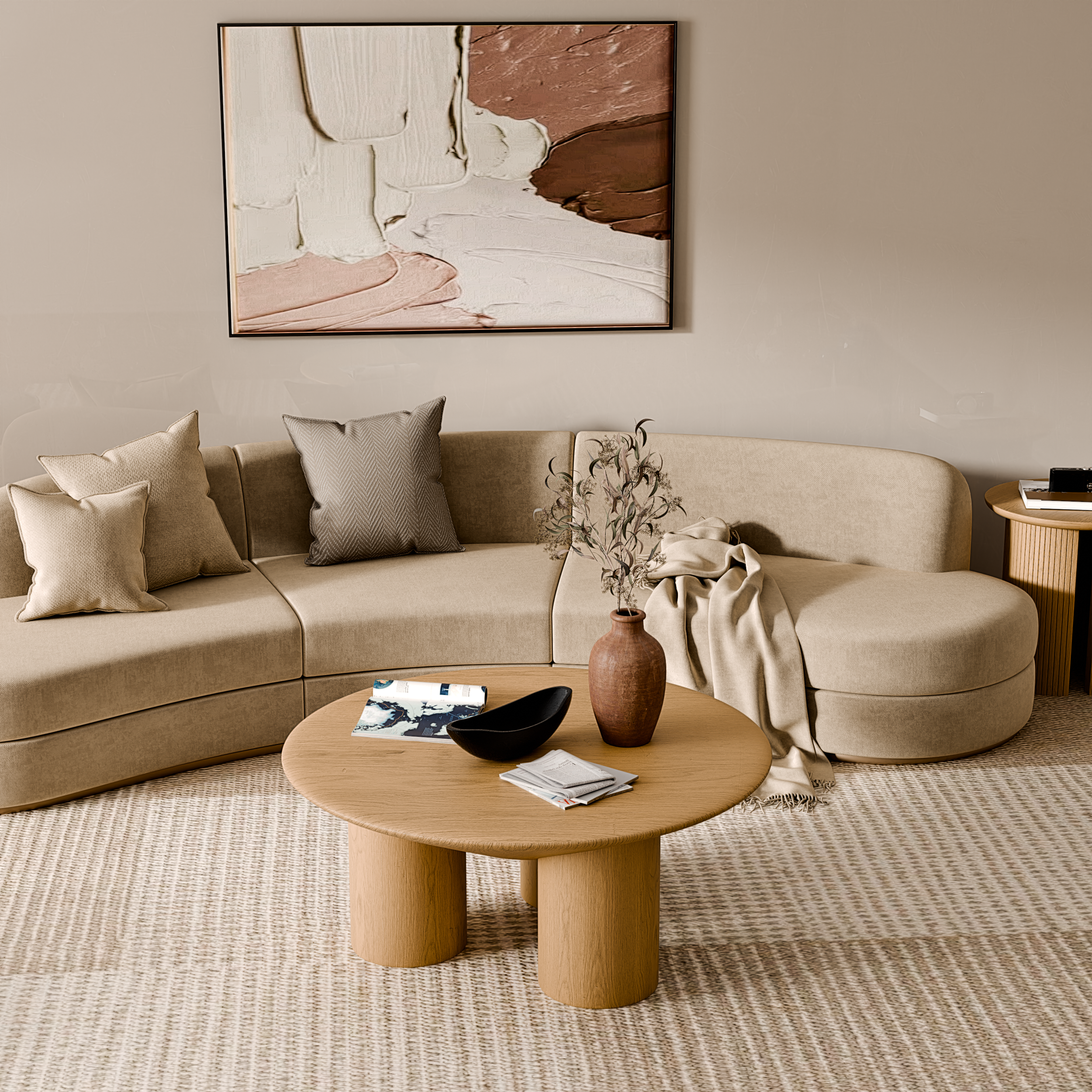
If your sofa has tall, slim legs, a coffee table with a solid base or shorter, thicker legs can help ground the space
If your sofa sits low or has no visible legs, a coffee table with higher, slimmer legs can add balance
When a room feels too “leggy,” it often lacks a sense of stability. The right coffee table helps anchor the entire living room.
How should your lifestyle influence your coffee table choice?
Perhaps the most important question of all: how do you actually use your living room?
Need extra storage? Look for a coffee table with drawers or compartments
Love playing board games or entertaining guests? Make sure the table is comfortable to gather around
Tend to put your feet up while watching TV? An upholstered ottoman might be a better fit
For families with children, it’s best to avoid sharp edges and glass tops. There are plenty of stories about broken glass coffee tables to know they’re not the safest option for kid-friendly homes.
What coffee table materials work best for your space?
Before shopping, narrow down materials that suit both your lifestyle and your interior—not just what looks good in a showroom.
In small spaces, lighter or transparent materials can reduce visual clutter
If you have mid-tone hardwood floors, consider avoiding matching wood and opt for contrasting materials like marble or travertine
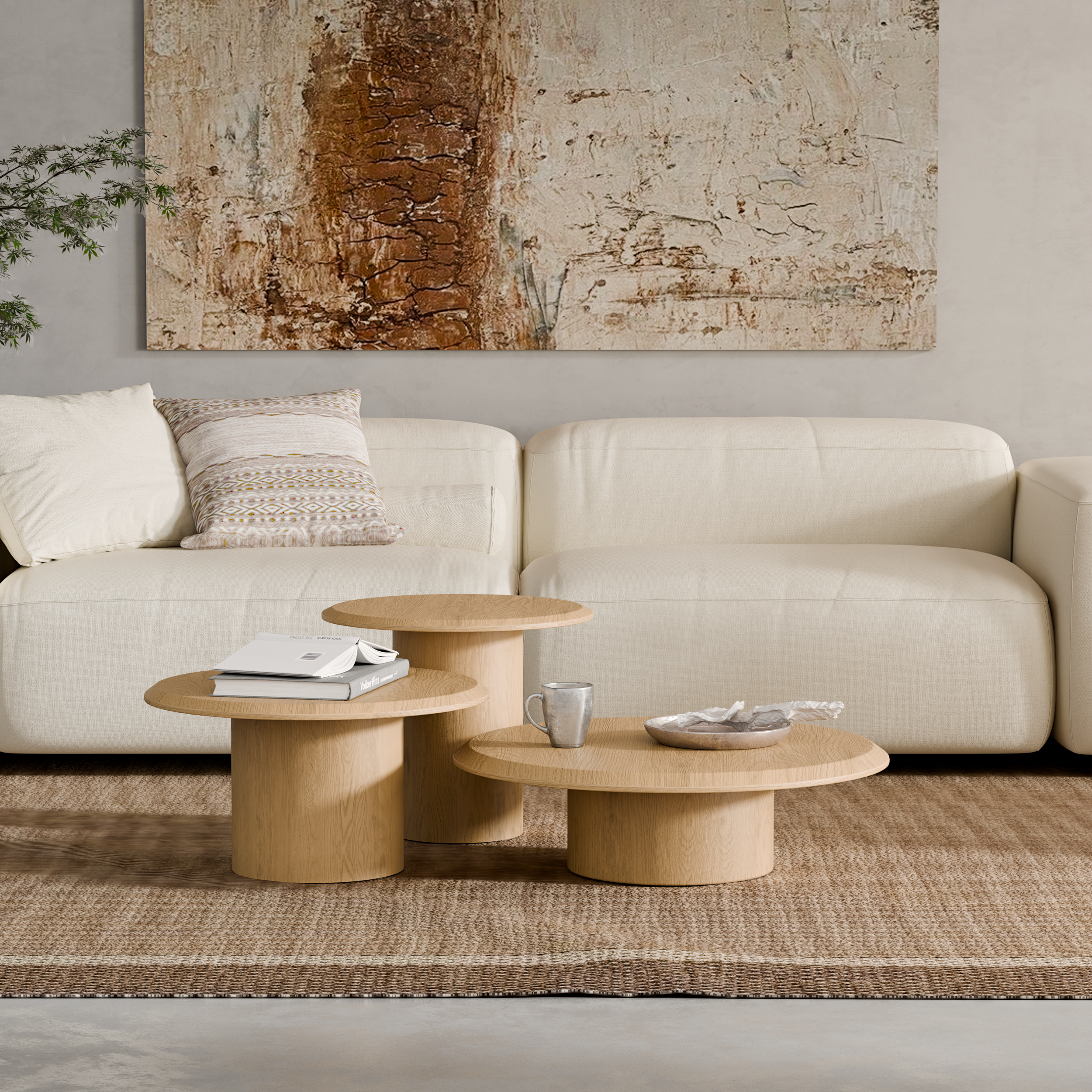
Decide whether you want a coffee table that’s easy to move or one that firmly anchors the room
Answering these questions will make it much easier to find a coffee table that truly fits your space.
So, what makes the “right” coffee table?
The best coffee table isn’t just about style—it’s about comfort, proportion, function, and how well it supports your everyday life. By asking the right questions about height, scale, clearance, visual balance, and materials, you can avoid common mistakes and create a living room that feels both practical and well-designed.